
Dark-Themed Japanese Names, From Shadow to Dusk
Yami 闇 is the clearest database-listed example, though ordinary use is unverified. Shadow, dusk and sorrow are related themes, not the same meaning.
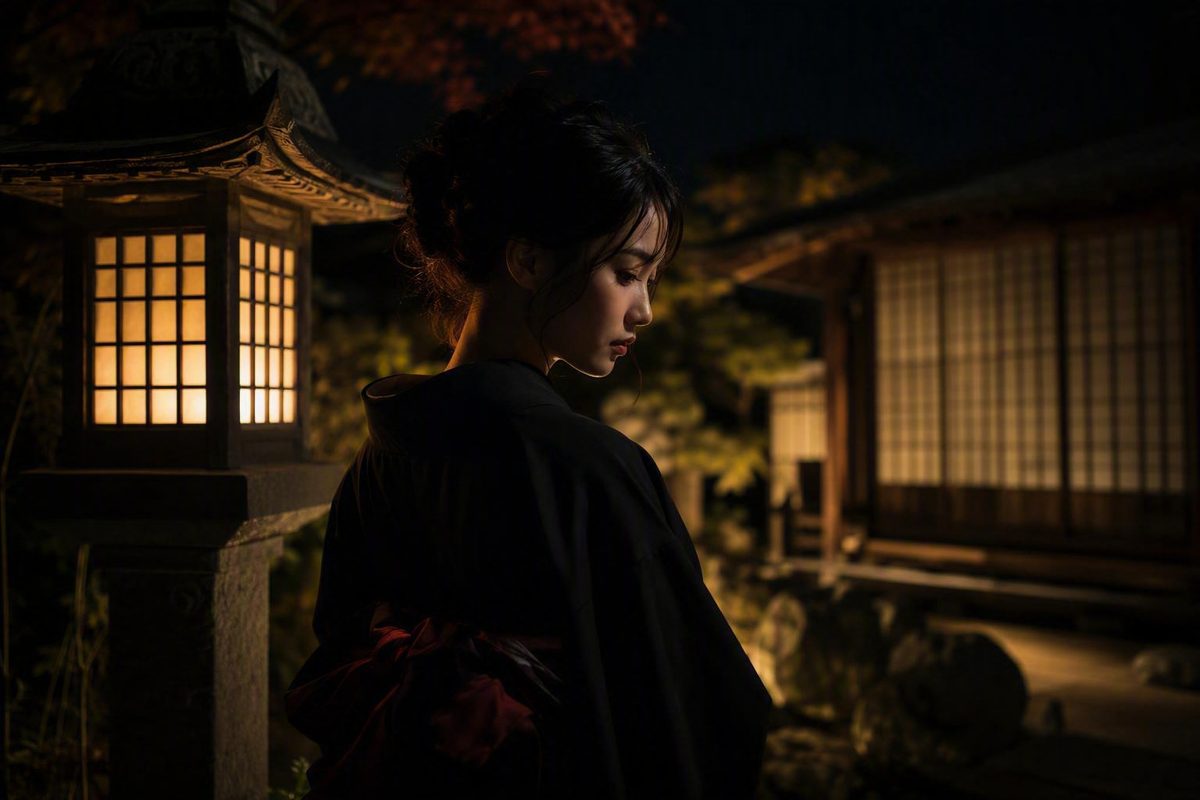
The entries below are best understood as database-listed dark-themed spellings, not as a verified collection of conventional Japanese given names. The available catalogs support particular readings, kanji forms, and component definitions, but they do not establish that every spelling is commonly used, naturally read, culturally appropriate, or suitable for a real person.
Before the List: What “Meaning Dark” Actually Means in Japanese
A romanized Japanese name such as Mikage, Maika, or Hokage does not have one fixed meaning. The same pronunciation can correspond to several kanji spellings, and changing the kanji can substantially change the interpretation. A statement such as “Mikage means shadow” is therefore incomplete unless it identifies the exact written form.
Japanese writing also distinguishes meaning-bearing kanji from the phonetic scripts hiragana and katakana. Kanji represent ideas or meanings and can have multiple pronunciations, including readings used specifically in names. Hiragana and katakana represent sounds; their characters do not independently preserve the lexical meanings associated with an unshown kanji spelling. Consequently, hearing a Japanese name may not reveal how it is written, while seeing its kanji may not make the intended reading obvious—even to a Japanese speaker, according to this overview of Japanese name writing and pronunciation.
When evaluating Japanese names meaning dark, it helps to distinguish three levels of interpretation:
- The dictionary senses of an individual kanji. For example, 影 is primarily associated with “shadow,” while 闇 has a more direct connection with darkness.
- A component-by-component gloss. 美影 can be divided into beauty plus shadow. That does not automatically make “beautiful shadow” an established translation of the complete name.
- The overall impression of a personal name. A combination may appear poetic, ominous, obscure, or fantasy-oriented to a creative user, but that impression is not evidence of a verified whole-name meaning or native-speaker consensus.
The available name catalogs classify spellings either through kanji associated with “dark” or through a much broader darkness theme. That broader approach can include shadow, sorrow, blackness, death, and supernatural imagery. Catalog inclusion therefore does not mean that every complete spelling literally translates as “darkness.”
This guide uses four broad categories:
- Direct darkness: spellings containing a kanji explicitly glossed as dark or darkness, especially 闇.
- Shadow: spellings built around 影, whose primary gloss is shadow rather than darkness.
- Twilight or obscurity: forms containing characters such as 昏, 晦, or 昧.
- Darker imagery: combinations involving sorrow, blackness, death, demons, or related ominous ideas.
These distinctions matter because shadow, dusk, ignorance, sorrow, and death are not interchangeable translations of “dark.” A spelling that works for an antagonist or supernatural game character may be a poor choice for someone seeking a neutral personal name.
Database inclusion alone does not establish frequency, conventionality, current use, intuitive pronunciation, cultural appropriateness, legal registrability, or suitability for a real person. Unless independent usage evidence is available, each entry should be treated as a catalog-listed spelling rather than an attested recommendation.
The Most Direct Database-Listed Examples
Two entries provide the clearest starting points in the supplied material: Yami 闇 for direct darkness and Ei 影 for shadow. They are “direct” because of their displayed characters, not because their status as ordinary personal names has been independently established.
| Romanized reading | Exact kanji | Supported meaning | Category | Source and evidence limitation |
|---|---|---|---|---|
| Yami | 闇 | The database glosses 闇 as “dark, ignorant, darkness.” | Direct darkness | JapaneseNames.info; labeled male by that database, but ordinary real-world use is unverified |
| Ei | 影 | The character is glossed primarily as “shadow.” | Shadow | NazukePON; conventional personal-name usage is unverified |
Among the supplied examples, Yami 闇 comes closest to an unambiguous answer to “What Japanese name means darkness?” JapaneseNames.info displays it as a male name and gives the character the senses “dark, ignorant, darkness.” Its search page reports 79 first-name results, although the supplied material does not expose or validate the complete set (JapaneseNames.info dark-name results).
The male classification should be treated strictly as the database’s label, not as an independently verified naming rule. The listing also does not show that Yami 闇 is a common, conventional, or natural given name in ordinary use. It supports a displayed reading, spelling, gender label, and component gloss—nothing more.
Ei 影 is direct in a different sense: its displayed spelling consists entirely of the character for shadow. Shadow is thematically related to darkness, but it is not the same concept. Ei therefore belongs under shadow imagery, not literal darkness.
Scope note: This is a cautious shortlist, not a reproduction of every result reported by either database. The supplied excerpts do not expose or validate every listed spelling, and a larger result count would not necessarily produce a more reliable set of recommendations.
Japanese Names Built Around Shadow
The character 影 provides the broadest coherent family of dark-themed spellings in the available material. Its central idea is shadow, although the database also gives wider senses involving reflections, indistinct shapes, traces, or images.
NazukePON reports 433 results in its broad “darkness” category. The visible results extend well beyond literal darkness, and the source does not establish the frequency or conventionality of the listed spellings (NazukePON’s darkness category).
| Reading | Kanji | Component glosses | Restrained thematic description |
|---|---|---|---|
| Yoshikage (ヨシカゲ) | 静影 | 静: quiet or calm; 影: shadow | Quiet plus shadow |
| Mikage | 美影 | 美: beauty; 影: shadow | Beauty plus shadow |
| Mikage | 御影 | 御: respectful or honorific expression; 影: shadow | Respectful expression plus shadow |
| Kagemi | 影美 | 影: shadow; 美: beauty | Shadow plus beauty |
| Kagero | 影狼 | 影: shadow; 狼: wolf | Shadow plus wolf |
| Yoko | 影子 | 影: shadow; 子: child or children | Shadow plus child |
| Eiko | 影湖 | 影: shadow; 湖: lake | Shadow plus lake |
| Hokage | 穂影 | 穂: ear of grain; 影: shadow | Grain ear plus shadow |
| Hokage | 火影 | 火: fire; 影: shadow | Fire plus shadow |
Source for the table: NazukePON. These are component glosses, not independently validated whole-name translations.
Yoshikage 静影, displayed by the database with the katakana ヨシカゲ, combines 静, associated with quietness or calm, and 影, shadow. It is safest to describe the spelling as “quiet plus shadow.” Calling the complete name “quiet shadow” would imply a validated compound translation that the evidence does not provide.
The two Mikage spellings demonstrate why romanization cannot stand alone:
- Mikage 美影 contains beauty and shadow.
- Mikage 御影 combines a respectful or honorific expression with shadow.
The catalog assigns both spellings the same romanized reading, but their written components differ materially. Recording only “Mikage—shadow” loses that distinction and may lead to the wrong interpretation being attached to the name.
Kagemi 影美 reverses the component order found in 美影, placing shadow before beauty. Kagero 影狼 combines shadow and wolf. That latter pairing may appear fantasy-oriented or predatory to an English-language writer, but such an impression is editorial synthesis from the components—not an established cultural connotation.
Other spellings offer different creative palettes:
- Yoko 影子: shadow plus child.
- Eiko 影湖: shadow plus lake.
- Hokage 穂影: an ear of grain plus shadow.
- Hokage 火影: fire plus shadow.
The two Hokage forms are particularly instructive. One can inspire agricultural or natural imagery; the other juxtaposes fire and shadow. Yet the source does not establish either spelling as common, conventional, or appropriate for a baby.
For fiction, component glosses can inspire a setting, costume, ability, or personality. “Shadow plus lake,” for example, might suggest moonlight on dark water. That symbolism would belong to the writer’s story, however—not to the database definition.
Darkness, Dusk, Obscurity, and Concealment
Not every dark-associated kanji points to the same idea. The narrower catalog identifies relevant characters including 闇, 冥, 昧, 晦, and 昏, each of which can carry senses beyond the English adjective “dark.”
| Reading | Kanji | Relevant components | Best category |
|---|---|---|---|
| Kenmei | 堅冥 | 堅: firm or hard; 冥: darkness, afterlife, or divine power | Darkness or afterlife-associated |
| Meisa | 冥沙 | 冥: darkness, afterlife, or divine power | Darkness or afterlife-associated |
| Maika | 昧歌 | 昧: dark, obscure, or ignorant; 歌: song | Obscurity |
| Maika | 昧香 | 昧: dark, obscure, or ignorant; 香: fragrance | Obscurity |
| Kokon | 胡昏 | 昏: dusk, dark, or ignorant | Dusk or darkness |
| Natsumi | 捺晦舞 | 晦: dark, last day, or hide | Concealment or obscurity |
| Natsuma | 捺晦舞 | 晦: dark, last day, or hide | Concealment or obscurity |
| Madara | 斑 | Spots, unevenness, or dark | Loose dark association |
Source for the table: JapaneseNames.info. The catalog supports the displayed readings, spellings, and component glosses but not natural English translations of the complete forms.
Kenmei 堅冥 pairs 堅, glossed as firm, hard, or to harden, with 冥. The database associates 冥 with darkness, the afterlife, or divine power. Because that range reaches beyond visible darkness, the complete spelling should not be flattened into “dark.” For a fictional character, it might inspire firmness combined with an otherworldly element, but that is a creative interpretation.
Meisa 冥沙 also contains 冥. The evidence supports identifying its darkness- and afterlife-related range, but not inventing a polished translation for the entire spelling. An English phrase assembled from individual dictionary glosses is not automatically how the complete form would be interpreted as a name.
The two Maika spellings retain 昧 while changing the final character:
- 昧歌 combines the dark-, obscure-, or ignorant-associated 昧 with 歌, song.
- 昧香 combines 昧 with 香, fragrance.
A writer might choose between them for musical or sensory imagery. Someone considering a real person’s name must also account for the less flattering senses attached to 昧. The supplied gloss includes obscurity and ignorance, so the character should not be presented as expressing only elegance or dim light.
Kokon 胡昏 contains 昏, associated by the database with dusk, darkness, or ignorance. Dusk is a useful thematic distinction because it refers to a transition in light rather than darkness in the abstract. Even so, “dusk” is not established here as a translation of the whole spelling.
Natsumi 捺晦舞 and Natsuma 捺晦舞 are displayed as different readings of the same written form. Their relevance is the presence of 晦, glossed with senses including dark, the last day, and to hide. The evidence does not provide a natural English translation of the complete compound.
Madara 斑 is looser still. Its gloss spans spots, unevenness, and dark, suggesting mottling or uneven coloration rather than literal darkness. It belongs at the edge of a dark-themed collection, not beside 闇 without qualification.
These distinctions have practical consequences. 冥 may introduce an afterlife association; 昧 can carry ignorance or obscurity; 晦 may involve concealment; and 昏 may refer to dusk. Each can support a dark atmosphere in creative work, but they are not interchangeable ways to write a neutral name meaning “dark.”
Sorrow, Blackness, Death, and Supernatural Imagery Are Separate Themes
Broad online darkness categories often include anything gloomy, emotionally heavy, ominous, or connected with horror. The visible NazukePON entries include shadow, sorrow, blackness, death, and supernatural imagery, rather than only literal translations of darkness.
One emotional group uses 憂, which the catalog glosses as sorrow:
| Reading | Kanji | Relevant component | Category |
|---|---|---|---|
| Yui | 憂衣 | 憂: sorrow | Emotional darkness |
| Yuto | 憂斗 | 憂: sorrow | Emotional darkness |
| Ui | 憂 | 憂: sorrow | Emotional darkness |
| Yuki | 憂紀 | 憂: sorrow | Emotional darkness |
Kian 鬼闇 belongs to a more overtly ominous category. At the component level, 鬼 is glossed as demon, monster, or supernatural, while 闇 is glossed as dark, ignorant, or darkness. The combination can therefore be categorized as supernatural darkness, although its naturalness as a personal name remains unknown.
The same catalog displays Kokushibo 黒死牟 and Kyoshiro 狂死郎, whose components include ideas associated with blackness, death, and madness. These forms are useful as boundary markers showing how broad the category is; the evidence does not establish them as ordinary given names (NazukePON).
These themes should remain separate:
- Literal darkness: 闇-based forms.
- Shadow: 影-based forms.
- Sorrow: 憂-based forms.
- Death or blackness: forms containing characters such as 死 or 黒.
- Supernatural imagery: forms using 鬼 or similarly ominous elements.
The distinction helps creative users control tone. A stealth-oriented scout, a grieving protagonist, and a demonic antagonist do not require the same semantic signal. It also prevents death, madness, ignorance, or supernatural menace from being presented as stylish but otherwise neutral variations on “dark.”
How the Same Reading Changes When the Kanji Changes
Japanese names can be ambiguous in both directions. Hearing a reading often does not reveal the kanji, and seeing an unfamiliar written name may not guarantee the intended pronunciation. A name’s spoken and written forms should therefore be documented together.
Consider Mikage:
| Reading | Kanji | Component contrast |
|---|---|---|
| Mikage | 美影 | Beauty plus shadow |
| Mikage | 御影 | Respectful expression plus shadow |
The reading remains Mikage in the catalog, but the first character changes. Reducing either spelling to “Mikage means dark” would erase both the distinction between beauty and respect and the distinction between shadow and literal darkness.
The same principle applies to Hokage:
| Reading | Kanji | Component contrast |
|---|---|---|
| Hokage | 火影 | Fire plus shadow |
| Hokage | 穂影 | Ear of grain plus shadow |
Changing 火 to 穂 does more than alter the visual appearance. It changes the imagery from fire to grain while retaining the cataloged reading.
Maika provides a third comparison:
| Reading | Kanji | Component contrast |
|---|---|---|
| Maika | 昧歌 | Obscurity-associated character plus song |
| Maika | 昧香 | Obscurity-associated character plus fragrance |
Both forms retain 昧, but the second characters lead in different semantic directions. Romanization alone cannot preserve that distinction.
This phenomenon is not limited to dark themes. One language-learning overview uses Yuki to demonstrate that a single reading can be written 雪, associated with snow; 幸, associated with happiness or luck; or 有希, given a different component-based interpretation. It consequently recommends evaluating pronunciation and kanji together and asking Japanese speakers to check proposed names for unusual or negative associations (LingoDeer’s Japanese naming overview).
Every entry in this article therefore keeps its romanization and exact kanji together. Mikage 美影, Mikage 御影, and a kana-only ミカゲ may share a pronunciation, but they do not communicate the same written semantic information.
A name written only in hiragana or katakana communicates sound. It may still carry personal associations or be linked by its chooser to an intended concept, but the kana characters cannot automatically be assigned the dictionary meaning of kanji that are not shown. “Yami” written in kana should not be described as visibly containing 闇 unless that kanji is explicitly intended.
How to Choose a Dark-Themed Name for a Character, Game, or Real Person
The appropriate standard depends on the stakes.
For a fictional character, game avatar, team, or username, semantic experimentation is relatively low-risk. Begin by choosing the precise theme:
- Literal darkness for direct and stark imagery.
- Shadow for concealment, reflection, duality, or stealth.
- Dusk for transition, fading light, or liminality.
- Obscurity for secrecy or uncertainty.
- Sorrow for emotional weight.
- Death or blackness for horror and menace.
- Supernatural darkness for demons, monsters, or otherworldly forces.
Once you select a reading, preserve the exact kanji in your character sheet or design notes. Recording only “Mikage” or “Maika” invites confusion because another spelling may retain the sound while changing the components.
Creative users should also separate source-supported component meanings from invented narrative symbolism. It is supported that 影湖 contains characters glossed as shadow and lake. Deciding that the spelling symbolizes moonlight reflected on dark water is a valid creative choice, but it comes from the story rather than the database.
The standard should be much higher when naming a real person. The available evidence is insufficient to recommend any candidate here as natural, common, current, culturally appropriate, or legally registrable. Before considering one, ask:
- Is the exact spelling recognized in practice as a personal name rather than vocabulary, a title, a surname, or a creative construction?
- Is the proposed reading established or reasonably intuitive?
- How is the spelling gendered in actual use, if at all?
- Does it evoke unwanted senses such as ignorance, sorrow, death, madness, or evil?
- Does it strike qualified Japanese speakers as neutral, poetic, archaic, theatrical, or awkward?
- Does the exact spelling and reading satisfy current registration requirements in the relevant jurisdiction?
A Japanese naming overview reports that Japan’s Ministry of Justice maintains a list of kanji permitted in names. This article has not checked every candidate against that list, and permission to use an individual character would not by itself establish that a complete compound or proposed reading is natural or registrable (Babel Street).
For real-person use, consult current official requirements and obtain review from a qualified Japanese speaker or naming specialist. The review should cover the complete spelling, intended reading, likely associations, and applicable registration rules—not merely whether each character has an appealing English gloss.
No popularity ranking is offered here. Database order, page views, result totals, and unexplained numbers are not evidence of real-world name frequency. The available sources also do not support assigning pitch accents or promising native acceptance.
A Quick Comparison by Meaning and Tone
The following table groups spellings by semantic category rather than ranking them. “Best” depends on whether the intended effect is literal darkness, poetic shadow, dusk, sorrow, or overt horror.
| Semantic category | Selected spellings | Component-level tone | Catalog source | Evidence status |
|---|---|---|---|---|
| Direct darkness | Yami 闇 | Darkness; the catalog gloss also includes “dark” and “ignorant” | JapaneseNames.info | Database-listed and labeled male; conventional usage unverified |
| Shadow | Ei 影 | Shadow in a compact listed form | NazukePON | Component meaning supported; conventional usage unverified |
| Shadow | Mikage 美影 / 御影 | Beauty plus shadow, or respectful expression plus shadow | NazukePON | Complete translations and conventional usage unverified |
| Shadow | Kagemi 影美 | Shadow plus beauty | NazukePON | Component meanings supported; conventional usage unverified |
| Shadow | Kagero 影狼 | Shadow plus wolf; potentially fantasy-oriented in creative use | NazukePON | Real-world naturalness unverified |
| Shadow | Yoshikage 静影 | Quiet or calm plus shadow | NazukePON | Whole-name translation unverified |
| Shadow | Hokage 火影 / 穂影 | Fire plus shadow, or grain ear plus shadow | NazukePON | Conventional usage unverified |
| Darkness or afterlife association | Kenmei 堅冥 | Firmness plus darkness- or afterlife-associated 冥 | JapaneseNames.info | Should not be translated simply as “dark” |
| Darkness or afterlife association | Meisa 冥沙 | Contains 冥, with darkness- and afterlife-related senses | JapaneseNames.info | Complete interpretation unverified |
| Obscurity | Maika 昧歌 / 昧香 | Obscurity-associated 昧 plus song or fragrance | JapaneseNames.info | Potentially negative senses require consideration |
| Dusk or darkness | Kokon 胡昏 | Contains 昏, associated with dusk, dark, or ignorance | JapaneseNames.info | Complete interpretation and usage unverified |
| Sorrow | Yui 憂衣, Yuto 憂斗, Ui 憂, Yuki 憂紀 | Emotional darkness through 憂, sorrow | NazukePON | Sorrow component supported; not literal darkness |
| Supernatural darkness | Kian 鬼闇 | Demon or supernatural imagery plus darkness | JapaneseNames.info | Ominous component meanings; real-world naturalness unknown |
The table is deliberately selective. The supplied excerpts do not expose or validate every result reported by either database, and no inference should be made from database ordering, page views, totals, or unexplained scores.
Frequently Asked Questions
What Japanese name most directly means dark?
Among the database-listed examples examined here, Yami written 闇 is the most direct. JapaneseNames.info glosses 闇 as “dark, ignorant, darkness” and labels the listing male.
That does not establish Yami 闇 as a common or conventional personal name. It is best described as the clearest database-listed example based on its displayed character, with ordinary real-world usage still unverified.
Does Kage or 影 mean darkness in Japanese?
影 is primarily associated with “shadow,” not literal darkness. Shadow and darkness are related themes, but they are not exact synonyms.
In spellings such as Mikage 美影, Kagemi 影美, and Kagero 影狼, 影 contributes a shadow component. The complete forms should still be explained component by component rather than translated automatically as “dark” or “darkness.”
Can the same Japanese name pronunciation have different meanings?
Yes. The same reading can correspond to different kanji spellings. Mikage 美影 contains beauty and shadow, whereas Mikage 御影 contains a respectful expression and shadow. Hokage 火影 pairs fire with shadow, while Hokage 穂影 pairs an ear of grain with shadow.
The non-dark example Yuki demonstrates the same principle: it can be written using kanji associated with snow, happiness or luck, or another component combination. Romanization records pronunciation, not one fixed written meaning.
Are these dark-themed Japanese names suitable for a baby?
The evidence here is not sufficient to recommend them for a baby. Catalog inclusion does not establish that a spelling is conventional, current, culturally appropriate, naturally read, or legally registrable.
Some characters also carry potentially unwanted senses involving ignorance, sorrow, death, madness, demons, or the afterlife. Anyone considering a real person’s name should have the exact kanji and intended reading checked against current official requirements and reviewed by a qualified Japanese speaker or naming specialist.
Can a Japanese name written only in hiragana or katakana literally mean dark?
Hiragana and katakana represent sounds rather than independently carrying the lexical meanings of kanji. A kana spelling can communicate the pronunciation Yami, but it does not visibly contain 闇 or automatically inherit every dictionary sense of that character.
A chooser may associate a kana-only name with a particular kanji or concept. For the precise claim that the written name expresses darkness through 闇, however, the intended kanji must be explicit.
The clearest database-listed darkness example is Yami 闇, while spellings built with 影 provide a broader family of shadow imagery. Forms using 冥, 昧, 晦, 昏, 憂, 黒, or 死 introduce distinct—and sometimes strongly negative—ideas that should not be collapsed into a single English meaning.
For creative use, choose the exact theme and retain the precise kanji. For a real person, verify usage, reading, connotations, cultural reception, and legal acceptability through current official resources and qualified Japanese-language review.