
Most Players Land 12–20 Names — Here Is How to Beat That
Start with 30 seconds, and every famous person you name adds two more. Category hopping helps avoid stalls. Misspellings are fixed rather than punished.
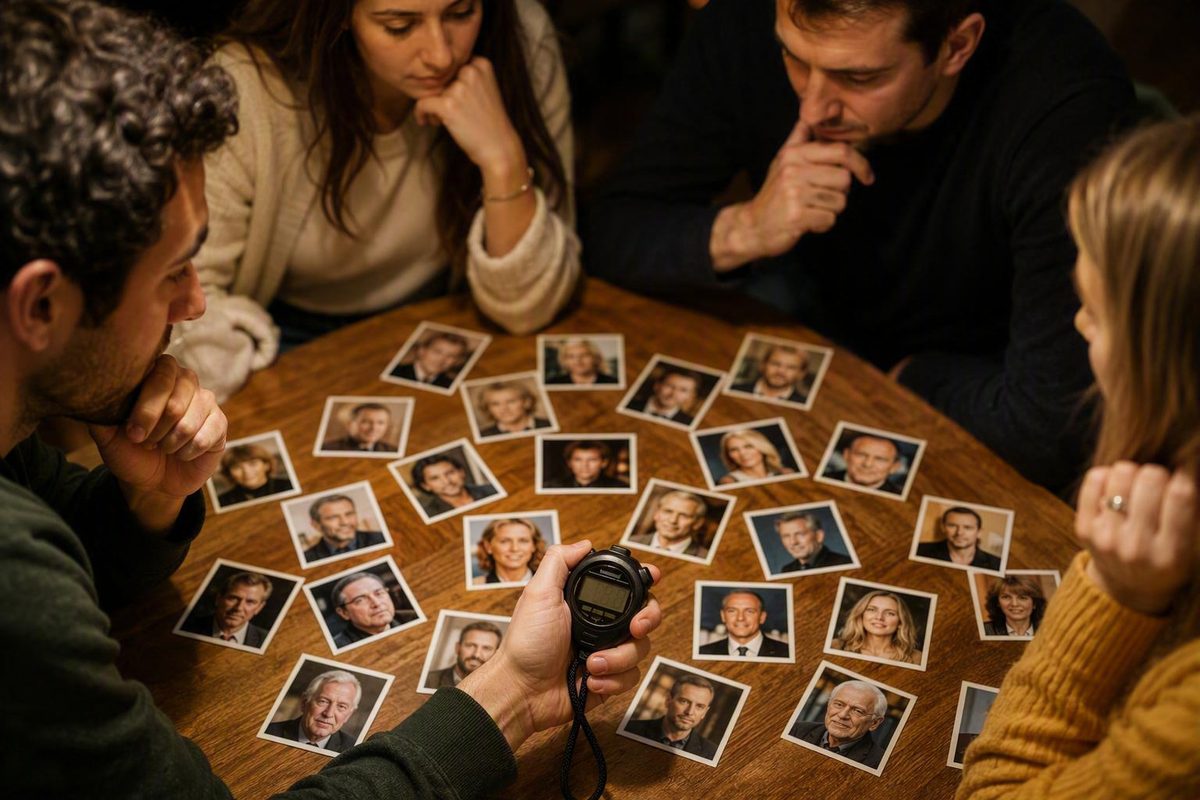
The rules fit in one sentence: you have 30 seconds, every famous person you name buys you two more, and the run ends the moment the clock beats your recall. Play it on the homepage — this article is about what happens in your head while you play, and how to get better at it.
Why the clock feels so brutal
Thirty seconds sounds short, but the timer is not really the limit — your retrieval speed is. Naming a famous person takes most people one to three seconds once a name is available. The run dies in the gaps: the four, five, six seconds where you know there are thousands of famous people and cannot produce a single one.
Psychologists call this a retrieval fluency problem. Your recognition memory for famous people is enormous — shown photos, most adults can identify hundreds of celebrities. But free recall, producing names from nothing, works completely differently. It walks along associations, and when a chain of associations runs out, you stall.
That is why the game’s economy is what it is. Two seconds per name means you break even only while producing a name at least every two seconds. Fast chains grow your clock; every stall spends it.
The strategy that actually works: category hopping
Ask someone to name famous people and they usually start with whoever is culturally loudest right now — a president, a pop star, an actor from the last thing they watched. That burst lasts five or six names. The players who post big scores do something different: they run categories.
Instead of “famous people” (an impossibly large, unstructured set), they query “US presidents” and rattle off four. Then “action movie stars.” Then “tennis players.” Then “painters.” Each category is a pre-built associative chain, and small categories are surprisingly fast because the search space is tiny.
A few chains that reliably produce names in under two seconds each:
- Heads of state — presidents and prime ministers, current and historic
- Your childhood’s musicians — whatever was on the radio when you were 14 is burned in permanently
- Athletes by sport — pick a sport, name its era-defining stars, switch sports
- Scientists from school — Einstein, Newton, Darwin, Curie come out in one breath
- Franchise casts — a single film franchise can be worth five actors
The skill ceiling is the switch itself: noticing a chain is about to run dry and jumping to the next category before you stall, not after four dead seconds.
What your list says about you
When your run ends, NameIt cleans your list — fixing spellings, collapsing duplicates, dropping the entries nobody would call famous — and then profiles you from what survived. It can do that because a free-recall list is not a random sample. It is ranked by what your memory reaches for first, which encodes your generation, your geography, and the corners of culture you actually pay attention to.
A list that opens with three Formula 1 drivers says something. So does one that is 80% musicians, or one where the most recent name is from 2009. The profile reads those signals back to you — the eras you live in, the fields you overweight, the names that stick versus the ones that never made it in.
What counts as “famous”?
The game’s cleanup pass is deliberately generous but not infinitely so. Real, widely known people count. Historical figures count. Widely recognized fictional characters get a pass; your dentist, gibberish, and “that guy from the thing” do not. Misspellings are fixed rather than punished — the game is testing recall, not spelling.
So: 30 seconds on the clock, categories loaded. See how many you can get.