
Their Voice Trademark Covers Less Than the Headlines Suggest
The Backstreet Boys filed for one spoken sound mark. Its limits reveal why trademark law remains an uncertain defense against AI voice clones.
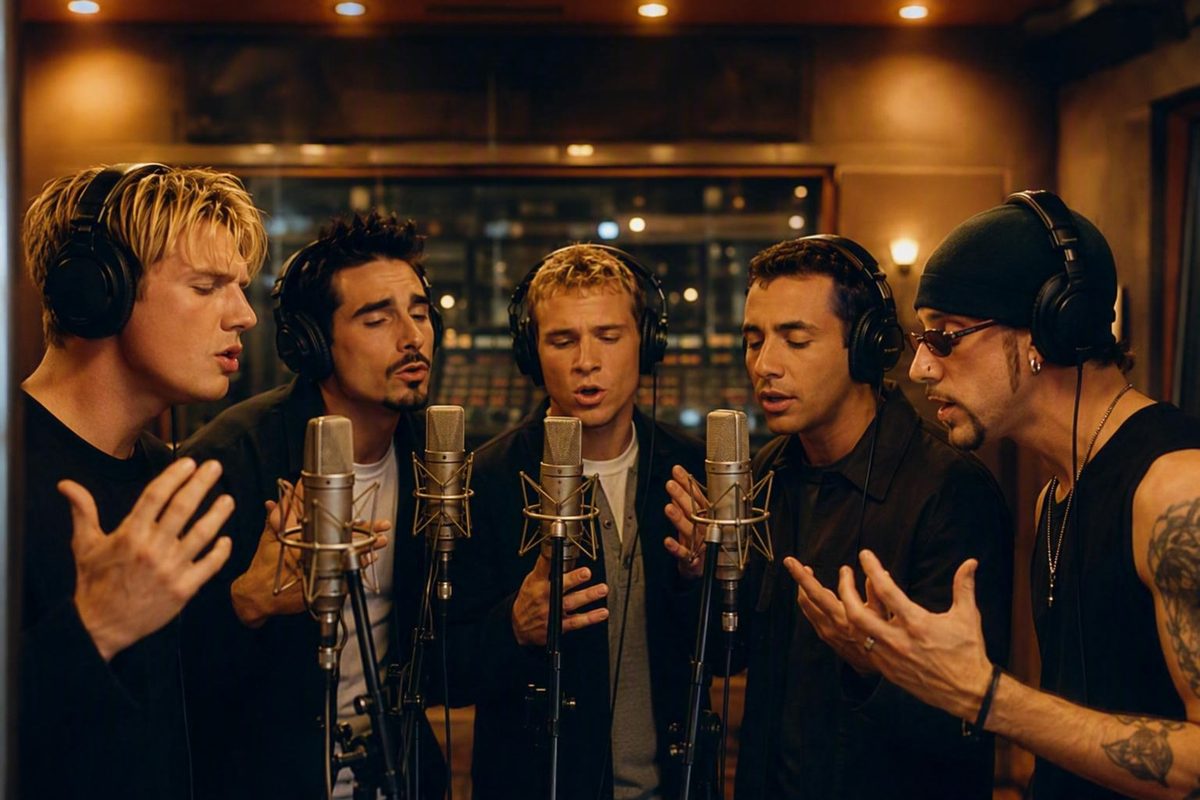
The Backstreet Boys did not obtain blanket ownership of their voices. BSB Entertainment reportedly applied to register one recording of all five members saying, “Hi, we’re the Backstreet Boys,” while the proposed federal law that would address unauthorized digital replicas directly—and provide $5,000 to $25,000 in statutory damages per violation—still was not law after advancing from committee in June 2026. The August legal update describes the NO FAKES Act’s proposed protections and status.
That distinction matters beyond one pop group. Taylor Swift and Lionel Richie also reportedly pursued comparable sensory marks in 2026 as defensive measures against voice cloning. These applications may help against fake endorsements or close copies used as branding, but trademark law still requires a connection to commercial source confusion. It does not prohibit every unauthorized imitation of a recognizable voice.
The Case for Trademarking a Famous Voice
The favorable view is not frivolous. A famous performer’s voice can operate like a name, logo, or sonic signature. If consumers hear a familiar introduction in an advertisement, ticket promotion, or commercial recording, they may reasonably take it as evidence that the performer produced, sponsored, or approved the offering.
Trademark law can protect sounds when consumers perceive them as identifying a commercial source. Vocal sounds are not categorically excluded: legal commentary has cited Pitbull’s registered falsetto vocalization, described as “EEEEEEEYOOOOOO,” as an example of a human vocal sound functioning as a mark.
A registration could therefore add a useful claim against an advertiser that copies an official vocal signature to make a promotion appear genuine. It could also support complaints through private platforms’ trademark-reporting systems, which may act without waiting for a final court judgment.
That is where the consensus is right. Filing now can establish another enforcement tool, particularly against close copies, fake endorsements, deceptive promotions, and uses designed to resemble official branding. Celebrities with years of consistent commercial use are also better positioned than ordinary applicants to show that the public associates a sound with one source.
The overstatement begins when that targeted tool is described as ownership of a voice. A sound mark protects source-identifying use, not vocal identity in every song, sentence, parody, impersonation, or synthetic recording.
Choose the voice use and commercial history; the tool shows which side has the stronger route under trademark law and the pending NO FAKES Act.
Test whether a voice trademark addresses the use you have in mind, then compare it with the pending NO FAKES Act. The default represents an ordinary person facing a noncommercial impersonation.
Trademark Route
There is no commercial source-confusion use, and zero years of commercial voice use does not establish the reported five-plus-year route to acquired distinctiveness.
Pending NO FAKES Route
The proposal would cover individuals generally and provide $5,000–$25,000 in statutory damages per violation, subject to its requirements and exclusions.
- No established five-plus years of commercial voice use.
- The clone is not being used to sell something.
- No consumer-confusion claim is selected.
- Trademark does not directly reach the impersonation; the proposed replica right is unavailable until enacted.
| Scenario | Trademark Position | NO FAKES If Enacted | Current Outcome |
|---|---|---|---|
| Ordinary person; noncommercial impersonation | No source-confusion route shown | Direct replica right proposed | Pending bill offers no protection today |
| Voice clone in a deceptive advertisement | Possible false-source or endorsement claim | Direct replica right proposed | Trademark may help now |
| Exact vocal signature in a fake promotion | Comparatively strong trademark theory | Direct replica right proposed | Rights holder has the stronger route |
| New song with different words but a similar voice | Uncertain without source confusion | Direct replica right proposed | Trademark reach remains unsettled |
| News, parody, satire, criticism, or commentary | Context and confusion still matter | Reported exclusions may apply | Expressive protections require analysis |
Sources: Kohrman Jackson & Krantz on the sound-mark filing; Husch Blackwell on the proposed NO FAKES Act. This tool gives general legal information, not legal advice.
The Application Covers One Five-Voice Introduction
Billboard reported that the application was filed with the U.S. Patent and Trademark Office on June 24, 2026. The claimed material was a recording of all five Backstreet Boys speaking in unison: “Hi, we’re the Backstreet Boys.”
Secondary reports link the filing to serial number 99904014. That number and the reported filing date do not establish its current prosecution history. The supplied evidence does not include a live official USPTO record showing whether the application is now pending, approved, refused, abandoned, or registered.
ArtistDirect described the application as pending USPTO review on June 29, 2026, rather than as an issued registration. Its report distinguished the filing from approval.
The filing is commonly called a sound mark, though some reports use the broader term sensory mark. Either label describes a particular source identifier—not five separate claims to the individual members’ voices. Because the proposed mark combines five voices speaking together, it cannot simply be assumed to cover one member speaking alone.
The band’s attorney had not responded to Billboard’s request for comment by June 26, 2026. The interpretation that the filing was intended to counter AI cloning comes from reporting and legal analysis, not a quoted statement of intent from the applicants.
Registration Requires More Than A Recognizable Voice
A memorable sound is not necessarily a trademark. It must distinguish the source of specified goods or services and be used as branding rather than merely appearing incidentally in a performance.
For applicants relying on acquired distinctiveness, the legal analysis of the Backstreet Boys filing identifies more than five years of substantially exclusive commercial use or survey evidence as possible support. It also explains the need for a sound file, a written description, and use that performs a trademark function. Kohrman Jackson & Krantz examines those registration requirements.
Context supplies much of the answer. An introduction used consistently at the beginning of official concert promotions looks more like branding than the same words spoken casually during an interview. Fame can help consumers make the association, but recognition alone does not prove that a sound identifies the source of particular goods or services.
Filing also is not approval. The viral claim that the band “trademarked their voices” collapses three different propositions: an application was filed, the USPTO approved it, and the resulting rights cover the voices generally. The evidence establishes only the reported application for the five-member introduction.
Consumer Confusion Sets The Practical Boundary
Trademark infringement generally turns on likely confusion about source, sponsorship, affiliation, or endorsement. The realism of an AI clone matters less than many headlines imply. A rough copy placed in a fake ticket advertisement may produce a stronger trademark claim than an uncannily accurate imitation in a clearly labeled, unofficial experiment.
| Use Of The Audio | Trademark Assessment |
|---|---|
| Exact introduction in a fake advertisement | Comparatively strong source-confusion theory |
| Similar introduction with altered words | Depends on sound, presentation, market, and likely confusion |
| New song using different words | Substantially less certain under the phrase-specific mark |
| Clone of one member | Materially different from the five-voice recording |
| Parody, commentary, or news use | Context, labeling, defenses, and confusion still matter |
Changing one greeting would not automatically avoid a claim; exact duplication is not always required. Conversely, general similarity in timbre or accent would not automatically prove infringement. The commercial impression and the way an audience encounters the recording remain central.
No supplied source identifies a court decision holding that registration of one spoken introduction controls every AI-generated song or speech using a similar voice. Legal commentary says it “remains far from certain” that a granted mark could stop cloned voices delivering different words.
That uncertainty does not make the application pointless. It scopes its likely value. The strongest cases would involve close copying or a use that makes consumers believe the group is officially involved. A synthetic recording that merely impersonates the members without functioning as source-identifying branding presents a weaker trademark theory.
Platform Removal Is Not The Same As Infringement
An eventual registration could be valuable even before a court interprets its limits. Online services can remove material under their own complaint procedures and evidence standards. A rights holder might therefore use a registration to challenge synthetic audio presented as official.
Those private decisions would not settle the law. A platform could remove a close copy, ask for additional evidence, limit action to the registered introduction, or reject a complaint involving different words. Removal would not prove that a court would find infringement, and refusal would not prove that the use was lawful.
A pending application also may not carry the same practical weight as a registration. The supplied sources do not establish that any platform would remove every synthetic Backstreet Boys recording based on this filing.
Other Laws Protect Different Parts Of A Voice Dispute
Trademark is only one possible route when someone copies or synthesizes a voice. Each body of law protects a different interest and requires its own proof.
| Legal Route | What It Protects | Principal Limit |
|---|---|---|
| Sound trademark | A sound identifying commercial source | No abstract ownership of a voice |
| Copyright | Original recordings, compositions, lyrics, and expression | A distinctive voice is not independently copyrighted |
| Right of publicity | Identity, potentially including name, image, likeness, or voice | Primarily state-based and varies by jurisdiction |
| False endorsement | Misleading suggestions of sponsorship or approval | Recognizability alone does not establish a claim |
| Consumer-protection law | Deceptive marketplace conduct | Elements and remedies vary |
| Privacy or biometric law | Covered collection or use of voice data | Not every imitation uses regulated data |
| Contract | Agreed limits on scripts, training, products, duration, and territory | Usually binds the contracting parties only |
If someone lifts audio from an existing Backstreet Boys recording, copyright may apply to the recording, composition, lyrics, or other protected expression. Copyright does not separately grant ownership of the abstract sound of a singer’s voice.
Newly generated audio presents a different problem. A synthetic voice promoting a product the group never endorsed might not copy an existing recording, yet it could raise trademark, false-endorsement, publicity-rights, unfair-competition, or consumer-protection issues. The available route depends on the jurisdiction, commercial context, material copied, audience understanding, and applicable defenses.
This is general legal information, not advice about a particular recording or dispute.
The NO FAKES Act Would Protect Identity More Directly
The proposed NO FAKES Act starts with the individual’s identity rather than a sound’s branding function. As described in the August legal analysis, it would create a federal right and civil cause of action for covered unauthorized digital replicas of a person’s voice or visual likeness. Its protection would extend to individuals generally, not only celebrities or professional performers.
The bill unanimously cleared the Senate Judiciary Committee on June 22, 2026, but the cited August status update did not report that it had become law. Its proposed $5,000-to-$25,000 statutory damages per violation, notice-and-takedown process, platform safe harbor, and partial preemption of inconsistent state law therefore are not current federal remedies or duties.
The proposal also includes exclusions for news, public affairs, documentaries, parody, satire, criticism, commentary, and scholarship. Those limits preserve room for reporting and expression rather than banning every imitation regardless of purpose.
If enacted in substantially the described form, the act would not require an ordinary person to prove five years of commercial voice use or show that a replica functioned as a trademark. That is the gap celebrity sound-mark filings cannot fill. Trademark can address a confusing fake advertisement; the proposed replica right would begin with unauthorized replication itself, subject to its exclusions and other requirements.
The Accurate Version Of The Headline
BSB Entertainment reportedly applied for a federal sound mark covering one recording of all five Backstreet Boys saying, “Hi, we’re the Backstreet Boys.” The evidence does not establish approval, current status, or separate ownership of each member’s voice.
If registered, the mark could be useful against close copies and commercial uses that imply official source, sponsorship, affiliation, or endorsement. Its reach becomes much less certain when an AI clone uses different words, imitates only one member, or does not create consumer confusion.
The broader federal answer remains pending. The NO FAKES Act would address digital replicas more directly and cover ordinary people as well as performers, but its proposed rights and damages were not operative law in the cited August 2026 update.