
Who Is the Most Famous Clothes Designer? Start With Coco Chanel
Coco Chanel is a strong classic answer. Meet eight famous fashion designers through signature clothes, memorable names and documented fashion firsts.
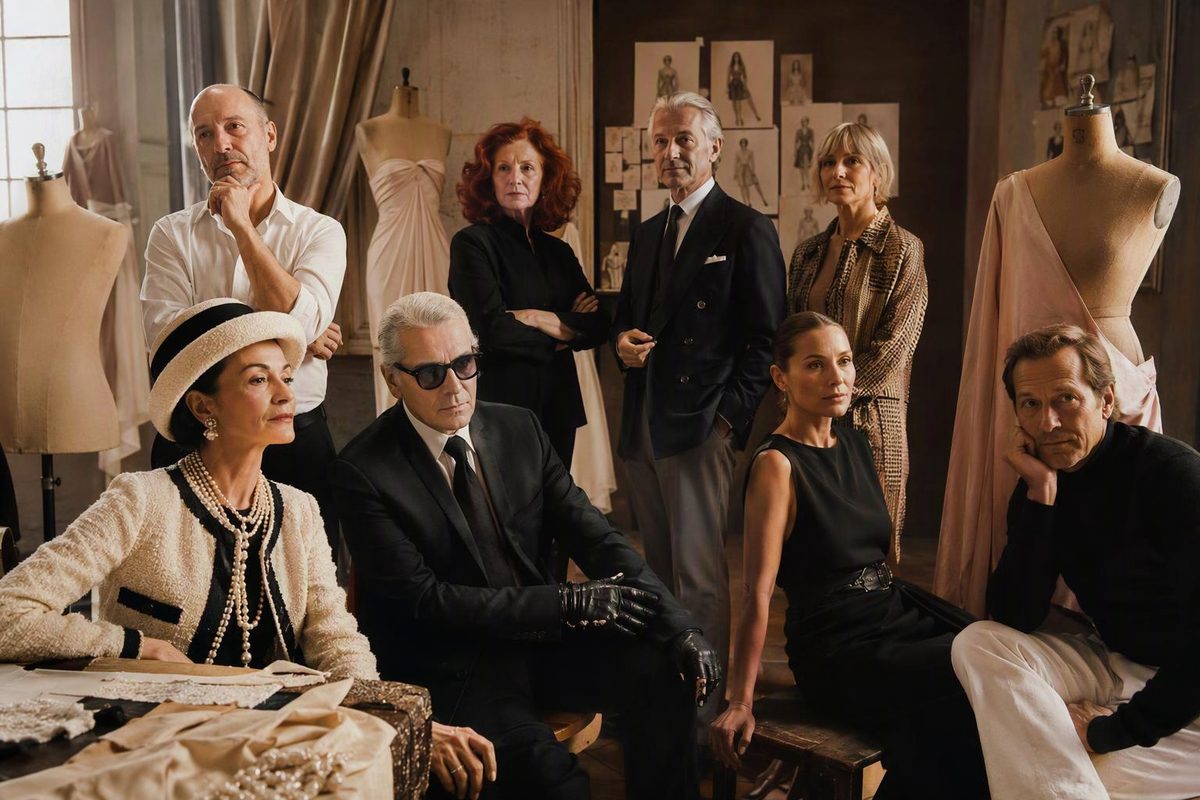
If you want one classic answer, start with Coco Chanel. Her name connects to a whole wardrobe of recognizable designs: the little black dress, tweed suit and quilted handbag. The V&A describes her design style as a continuing influence on how women dress. That makes her a strong cultural answer—not a measured winner of a worldwide recognition contest. (V&A)
“Most famous” could mean the person whose name you recognize, the label you see most often, or the designer whose work changed fashion. For trivia and name recall, start with a signature look rather than an unsupported ranking.
Eight famous fashion designers—and what to remember
Coco Chanel — the little black dress
Gabrielle “Coco” Chanel introduced a famously simple black day dress in 1926. American Vogue hailed it as “the frock that all the world will wear.” Remember her as a designer who helped make understated, comfortable clothes fashionable—not as the inventor of all black dresses. (National Museums Scotland)
Recall cue: a simple black dress → Coco Chanel.
Christian Dior — the New Look
Dior presented his couture house’s first collection on February 12, 1947. It featured sloping shoulders, a cinched waist and long, full skirts. Harper’s Bazaar editor Carmel Snow christened it the “New Look”: a sharp contrast to wartime styles. (La Galerie Dior; V&A)
Recall cue: a tiny waist and sweeping skirt → Christian Dior.
Yves Saint Laurent — Le Smoking
Saint Laurent’s “Le Smoking” tuxedo for women first appeared in 1966. His other memorable designs include the geometric, color-blocked dresses inspired by Piet Mondrian in 1965. Choose whichever image gives you the clearest route to his full name. (The Metropolitan Museum of Art)
Recall cue: a woman’s tuxedo → Yves Saint Laurent.
Giorgio Armani — relaxed tailoring
Armani’s signature is less about a single dramatic dress than a way of dressing. The Guggenheim credits him with removing excess ornament and translating sportswear into business- and eveningwear, creating an influential relaxed style. (Guggenheim)
Recall cue: understated, relaxed tailoring → Giorgio Armani.
Ralph Lauren — the Polo shirt
Lauren began with a Polo neckwear line in 1967 and introduced his version of the Polo shirt in 1972. The embroidered pony is a useful visual prompt, but keep the person and product separate: Ralph Lauren is the designer; Polo is the label. (Ralph Lauren’s timeline)
Recall cue: an embroidered polo player → Ralph Lauren.
Vivienne Westwood — punk and historical dress
Westwood helped create punk fashion, with provocative T-shirts and bondage outfits among her early work. Later collections reinvented historical styles. Her range makes “punk” a good starting cue, though it describes only part of her career. (V&A)
Recall cue: punk clothes and towering platforms → Vivienne Westwood.
Issey Miyake — pleats
Miyake is renowned for innovative permanent pleating and sculptural clothing. His Pleats Please Issey Miyake line launched in 1993, following several years of experiments and prototypes. (Artnet; official chronology)
Recall cue: accordion-like pleats → Issey Miyake.
Cristóbal Balenciaga — sculptural shapes
The person behind the famous surname was a Spanish designer celebrated for cutting and construction. His 1957 sack dress eliminated the defined waist, challenging the hourglass silhouette associated with Dior’s New Look. (V&A)
Recall cue: a dress that stands away from the body → Cristóbal Balenciaga.
Records table
| Record | Holder | Value | Date or season | Source |
|---|---|---|---|---|
| First fashion designer to create and market his own perfume | Paul Poiret | Launched Parfums de Rosine, his fragrance house | 1911 | The Met; Perfume Passage |
| First fashion design featured on Artforum’s cover | Issey Miyake | Rattan bodice and nylon-polyester skirt | February 1982 | Official chronology; Artforum’s issue record |
| First solo exhibition of a living designer at the Met’s Costume Institute | Yves Saint Laurent | Twenty-Five Years of Design | Opened December 14, 1983 | The Met; Musée Yves Saint Laurent Paris |
These firsts show different routes to prominence: Poiret extended fashion into fragrance, Miyake crossed into an art magazine, and Saint Laurent received museum recognition during his lifetime.
Turn the clothes into a name challenge
Cover the designer names and try this sequence: black dress, full skirt, tuxedo, relaxed tailoring, polo pony, punk, pleats, sack dress. Say the full name for each before checking.
For a second round, reverse the task: name the designer, then describe the clothes. You can also use fashion as one category in the timed famous-person recall game, then switch to famous painters when you run out of designers.