
Coco Chanel Leads This Fashion Designer Recall Shortlist
Coco Chanel is the all-time editorial pick, not a measured winner. Match nine famous fashion designers to their signature looks, labels and name-recall cues.
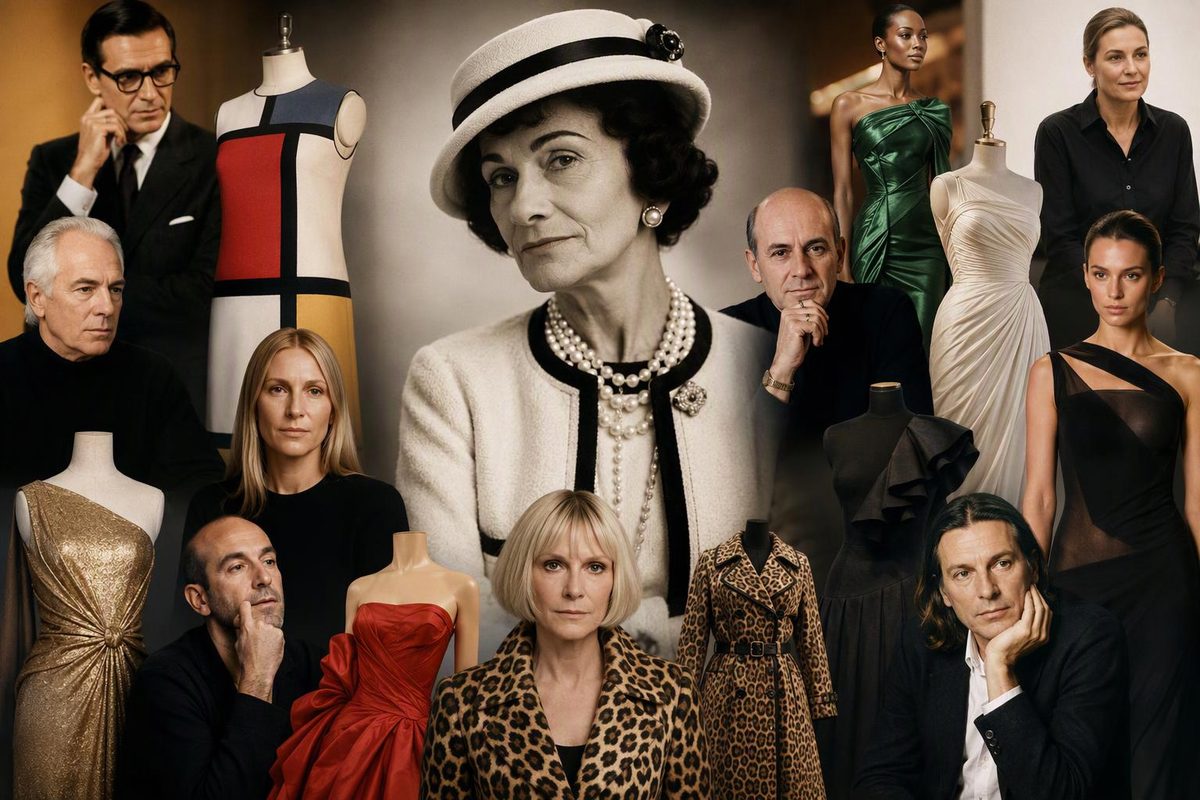
Coco Chanel is a strong editorial pick for the most famous fashion designer if you mean an all-time fashion icon. Her association with the little black dress, the tweed suit and the fashion house bearing her name makes her a useful first answer. The Metropolitan Museum of Art identifies her as a designer who made a lasting impression on twentieth-century womenswear. That supports her importance—not a measured worldwide first-place ranking. Source: The Met
The distinction matters for trivia: recognizing a designer’s name, knowing a fashion label and understanding someone’s influence are different achievements. Chanel is the editorial choice here, while Christian Dior, Yves Saint Laurent, Giorgio Armani and the other names below give you a broader set of answers. This is a nine-person shortlist, not a ranked league table.
Pick a look or label to find the designer and the distinction worth remembering.
Match The Clue To The Designer
Coco Chanel
A celebrated association, not a claim that she invented black dresses.
| Clue | Designer | Keep Straight |
|---|---|---|
| Little black dress | Coco Chanel | A celebrated association, not a claim that she invented black dresses. |
| New Look / Bar suit | Christian Dior | Cinched waist and full skirt; 1947 debut. |
| Le Smoking / Mondrian dresses | Yves Saint Laurent | Women’s tuxedo: 1966. Mondrian collection: 1965. |
| Soft, relaxed suit | Giorgio Armani | Richard Gere wore his designs in American Gigolo (1980). |
| Polo | Ralph Lauren | Neckwear: 1967. Emblem on women’s shirts: 1971. Polo shirt: 1972. |
| Chanel’s later reinterpretation | Karl Lagerfeld | Haute couture: 1983; ready-to-wear: 1984. Not Chanel’s founder. |
| Punk / historical corsets | Vivienne Westwood | The punk shop connection also involved Malcolm McLaren. |
| Tailoring and runway theatre | Alexander McQueen | Kate Moss appeared as a ghostlike figure in a glass pyramid. |
| Comme des Garçons | Rei Kawakubo | Name the designer, not just the label. |
Sources: The Met, V&A, Guggenheim and Ralph Lauren’s official timeline, cited in the article. These are recall pairings, not fame rankings.
Chanel Is the Pick, Not a Proven Global Winner
The sources behind this shortlist document designers’ work, collections and careers. They do not provide a comparable worldwide name-recognition figure for each person. There is no survey percentage here that establishes Chanel above Dior, Armani or anyone else. Without that evidence, calling her the definitive global winner would turn an editorial judgment into an unsupported measurement.
A question about the most recognizable label would also require different evidence. Someone might recognize Polo’s embroidered emblem without retrieving Ralph Lauren’s name. Someone else might know Chanel as a fashion house without distinguishing Coco Chanel from Karl Lagerfeld. Neither response measures exactly the same thing as naming the individual designer.
For a general-knowledge answer, use Coco Chanel. For a question with a specific garment, collection or label attached, follow that clue rather than automatically choosing her. A women’s tuxedo points to Yves Saint Laurent; the New Look points to Christian Dior. Those associations are more precise than an overall claim about fame.
Coco Chanel: The Little Black Dress
Gabrielle “Coco” Chanel built her reputation with practical, often menswear-inspired clothes. Jersey—a fabric then commonly used for men’s underwear—suited her simple, easy-to-wear designs. That gives the name a connection to a way of dressing, not just to the label that carries it.
Her black dress became an especially durable reference: in 1926, American Vogue compared it to the Ford, suggesting its broad appeal as a fashion basic. The useful association is little black dress → Coco Chanel. The misleading version is that Chanel invented black dresses. Remember the celebrated fashion reference without expanding it into that claim.
The tweed suit supplies another route back to her name, but it also introduces a possible mix-up. Chanel’s later collections are not all Coco Chanel’s personal work. Karl Lagerfeld subsequently reinterpreted the house’s established motifs. When the prompt asks for the founder, answer Coco; when it asks about that later reinterpretation, Karl belongs in the answer.
For name recall, keep “Gabrielle” and “Coco” attached to the same person. They are not two designers to memorize. Coco Chanel is the compact answer to practice, with the little black dress as the first visual hook and the tweed suit as a second.
Three Designers With Distinct Suit Cues
Christian Dior: The New Look
Dior’s 1947 debut became known as the New Look: sloping shoulders, a full bust, a cinched waist and long, full skirts. It was a striking contrast to wartime fashions. His celebrated Bar suit gives that silhouette a name and an image to remember. Sources: V&A’s couture history and Bar suit examination
The strongest cue is not simply “a suit.” It is a tiny waist above a full skirt. That separates Dior’s reference from Saint Laurent’s tuxedo and Armani’s relaxed tailoring. All three can appear under the broad heading of tailoring, but their identifying silhouettes are different.
Keep the collection term and the designer together: New Look → Christian Dior. If a prompt instead gives you the Bar suit, the destination is the same. These are two clues for one name, not two separate designers. The year 1947 belongs to Dior’s debut here; it should not migrate to Saint Laurent’s later Le Smoking.
Yves Saint Laurent: Le Smoking
Saint Laurent presented Le Smoking, his tuxedo for women, in 1966. Another useful association is his 1965 Mondrian collection, which translated the painter’s geometric lines and blocks of color into dresses. Source: The Met
These clues give you two very different images for the same person: a woman in a tuxedo and a dress resembling a Mondrian painting. If one image fails to bring the name back, the other can serve as a second route. The point is to recover Yves Saint Laurent, not merely to recognize the garment.
The Mondrian connection can also misdirect a trivia answer. Mondrian is the painter referenced by the collection; Saint Laurent is the designer to name when the question concerns the dresses. Likewise, Le Smoking is the name of the fashion reference, not the person. Practice the complete pairing: Le Smoking → Yves Saint Laurent.
Giorgio Armani: Relaxed Tailoring
Armani introduced an unlined, unconstructed men’s jacket in 1975, followed by an unstructured jacket for women. The clothes offered a softer alternative to stiff tailoring. His designs in American Gigolo (1980), worn by Richard Gere, helped bring his name to the general public. Source: Guggenheim
Use a soft, relaxed suit → Giorgio Armani. The film supplies a second cue, but keep the roles separate: Richard Gere is the actor; Armani is the designer associated with the clothes. Recognizing Gere does not finish a question asking for the fashion name.
Within this three-designer group, imagine the outline before attempting the surname. Dior gives you the cinched waist and full skirt. Saint Laurent gives you the women’s tuxedo. Armani gives you softer, less rigid tailoring. That contrast is more useful for this shortlist than memorizing three names under the same vague word, “suits.”
Two Designers Whose Names Need Label Distinctions
Ralph Lauren: Polo Began With Ties
Lauren started his Polo neckwear line in 1967 with wide ties. His brand’s embroidered polo-player emblem appeared on women’s shirts in 1971, before the introduction of his Polo shirt in 1972. Remember the sequence: ties first, familiar shirt later. Source: Ralph Lauren’s official timeline
For a straightforward label clue, use Polo → Ralph Lauren. For a chronology question, the three steps matter: the neckwear line, the emblem on women’s shirts, then the Polo shirt. Collapsing all of them into a single launch would lose the distinction supplied by the timeline.
This is also a useful test of label recognition versus person recognition. “Polo” may be the word that comes to mind first, but a request to name a fashion designer needs Ralph Lauren. Attach the two now so the label becomes a route to the full name rather than a substitute for it.
Karl Lagerfeld: Chanel Reinterpreted
Chanel and Lagerfeld are two different people, not interchangeable names. Lagerfeld took over Chanel’s haute couture design in 1983 and ready-to-wear in 1984, reworking its tweed, chains, quilting and linked-CC motifs. Source: The Met
The dates describe two responsibilities: haute couture first, ready-to-wear next. They do not describe Coco Chanel founding the house. That is the central distinction to preserve when both names appear in the same question or answer list.
Use a paired cue: Chanel’s founder → Coco Chanel; later reinterpretation → Karl Lagerfeld. The shared house name makes these entries easy to confuse, so studying them together is more useful than treating each as an isolated surname. Tweed or quilting alone may not settle a question about which person is intended; the wording about founder versus later designer does.
Three Designers With More Unconventional Visual Cues
Vivienne Westwood: Punk And Historical Dress
Westwood and Malcolm McLaren helped define punk clothing through their King’s Road shop: bondage trousers, distressed knits, chains and safety pins. Her later collections reworked historical dress, including corsets and tartan. Source: V&A
Use punk safety pins, then historical corsets → Vivienne Westwood. Keeping both parts prevents the recall cue from reducing her work to punk alone. The later historical references belong to the same designer, not to a separate entry in the shortlist.
McLaren’s presence in the story also needs to stay intact: the account of the shop and punk clothing is shared, not a claim that Westwood acted alone. For this fashion-designer shortlist, however, the name you are practicing is Vivienne Westwood. The garments provide the bridge to that answer.
Alexander McQueen: Tailoring Meets Theatre
McQueen trained on Savile Row before launching his label in 1992. He combined precise tailoring with dramatic runway presentations; one show featured Kate Moss as a ghostlike apparition inside a glass pyramid. Source: V&A
Use a sharply tailored outfit on a theatrical runway → Alexander McQueen. The combination matters. “Dramatic fashion” is too loose a cue to distinguish him within this group, while the contrast between tailoring and spectacle gives you a more specific mental image.
The glass-pyramid presentation supplies another memorable route, but do not stop at the person appearing in it. Kate Moss is the name in the runway image; Alexander McQueen is the designer the clue is meant to retrieve. This is the same role distinction as Gere and Armani: a recognizable performer can help you reach the fashion name without becoming the answer.
Rei Kawakubo: Comme Des Garçons
Kawakubo’s work for Comme des Garçons challenges conventional ideas of beauty and fashionability. The Met’s 2017 exhibition explored her experiments across boundaries such as fashion/anti-fashion and clothes/not clothes. Source: The Met
The most direct cue is Comme des Garçons → Rei Kawakubo. Unlike a broad image such as “unusual clothes,” the label gives you a specific name to retrieve. Practice saying the designer’s name after the label rather than leaving the association at brand recognition.
The exhibition’s paired terms are useful for understanding the work, but they are not a fame score. They support Kawakubo’s place in this shortlist as a designer with a distinctive approach; they do not establish where she ranks in worldwide public recognition. Keep that same standard for Chanel and every other name here.
Turn Recognition Into A Name You Can Produce
Start with three prompts, covering the answers: little black dress, women’s tuxedo, soft suit. The names to produce are Coco Chanel, Yves Saint Laurent and Giorgio Armani. If you can picture the clothes but cannot name the person, revisit that pairing rather than adding more designers immediately.
Then try the labels: Polo and Comme des Garçons should lead to Ralph Lauren and Rei Kawakubo. Finish with the distinctions most likely to cause a wrong answer: Coco Chanel versus Karl Lagerfeld, Mondrian versus Saint Laurent, and Kate Moss versus McQueen.
Move through the groups—suit silhouettes, label-to-person pairings, punk and theatrical cues—instead of treating fashion as one enormous category. Use the NameIt game guide for the timed challenge, or switch subjects with famous painters and their recall cues. For the broad question, Chanel remains the editorial pick; for a specific clue, give the designer that clue actually identifies.